
Introducing Check Points: A New Way to Think About Alcohol and Choice
Alcohol is a common part of social life. For many, it’s tied to celebration, relaxation, and connection. However, it can also intersect with stress, habit, and environments in a way that can hinder intentional choice and lead to harmful behaviors.
Our new campaign, Check Points, is built on the idea that small moments of reflection can lead to safer, more intentional choices. Rather than focusing on restriction or judgment, Check Points encourages people to pause, check in with themselves, and decide what is best for themselves.
Why “Check Points”?
Human decision-making isn’t as straightforward as we would like to think. Research in psychology shows that many of our choices, especially those around substances, are shaped by context, emotion, and habit, often happening automatically rather than consciously.
Alcohol use in particular is strongly linked to impulsivity and decision-making processes. Studies have found that alcohol use and dependence are associated with reduced inhibitory control and less effective decision-making in complex situations (Decision making and impulsiveness in abstinent alcohol-dependent people and healthy individuals: a neuropsychological examination). Other research shows that even among social drinkers, more impulsive decision-making patterns, like prioritizing short-term rewards over long-term outcomes, are closely tied to alcohol use behaviors (Impulsive Decision Making in Young Adult Social Drinkers and Detoxified Alcohol-Dependent Patients: A Cross-Sectional and Longitudinal Study).
More recent work also suggests that decision-making acts as a bridge between personality traits (like impulsivity) and actual consumption behaviors, reinforcing how situation factors shape what we choose to drink and when (The role of decision-making and impulsivity in beverage consumption - ScienceDirect).
Decisions about drinking don’t happen in a vacuum; they happen in real time, shaped by emotions, previous experiences, and situational context. Check Points are intended to bring awareness to opportunities to interrupt automatic behaviors, creating space for intentional choice.
The Science Behind the Pause
At the core of this campaign is a well-established concept in behavioral science: the effect of a pause.
When decision-making becomes more deliberate, even briefly, it can counteract impulsivity, which is a key driver of substance use behaviors. Impulsivity, or action without forethought, is consistently linked to substance use and difficulty regulated behavior (Impulsivity in abstinent alcohol and polydrug dependence: a multidimensional approach). Research also shows that alcohol itself can increase impulsive choice and reduce the ability to weigh future consequences, making in-the-moment awareness even more important (Acute alcohol effects on impulsive choice).
Breaking the pattern of impulsivity can:
Shift decision-making from automatic to intentional
Engage cognitive processes related to self-control and evaluation
Reduce the likelihood of impulsive choices
Increase alignment with longer-term goals
In behavior science, this is often described as shifting from fast thinking to slow thinking, which allows people to be more deliberate and analytical in their thought processes (Adaptive Decision-Making “Fast” and “Slow”).
What Are Check Points?
Check Points are simple questions that you can ask yourself before or during drinking.
Some focus on your internal state:
Mood Check: How am I feeling right now?
Emotional State Check: Am I feeling anxious or down?
Energy Check: Am I tired, hungry, or overwhelmed?
Stress Check: Is stress influencing this choice?
Others focus on intention and awareness:
Intention Check: Am I drinking to celebrate or to cope?
Goal Check: What do I want from tonight?
Desire Check: What do I actually need right now?
Escapism Check: Am I trying to avoid something?
Some look at context:
Environment Check: Am I in a safe, supportive space?
Company Check: Who am I with?
Peer Pressure Check: Is this my choice?
Or physical and practical considerations:
Hydration Check: Have I had enough water today?
Quantity Check / Limit Check: How much have I had already?
Responsibility Check: What do I have tomorrow?
Budget Check: Can I afford this?
While some are more forward-thinking:
Long-Term Impact Check: How will I feel tomorrow?
Past Experience Check: What happened last time?
Health Goal Check: Does this align with my goals?
And others have reminders that alcohol isn’t the only option:
Alternative Options Check: What’s my non-alcoholic option?
Coping Check: Is there a healthier way to handle this?
Self-Care Check: What does my body actually need?
A Harm Reduction Approach
The Check Points campaign is grounded in harm reduction; that means meeting people where they are and supporting safer choices, whatever those choices may be. Not everyone wants or needs to completely abstain from alcohol, but everyone can benefit from having more awareness, control, and alignment between their choices now and their well-being later-on.
Over the coming months, we will be sharing Check Points across our social media, with the intention of creating awareness around the benefits of checking in with yourself before you choose to drink.
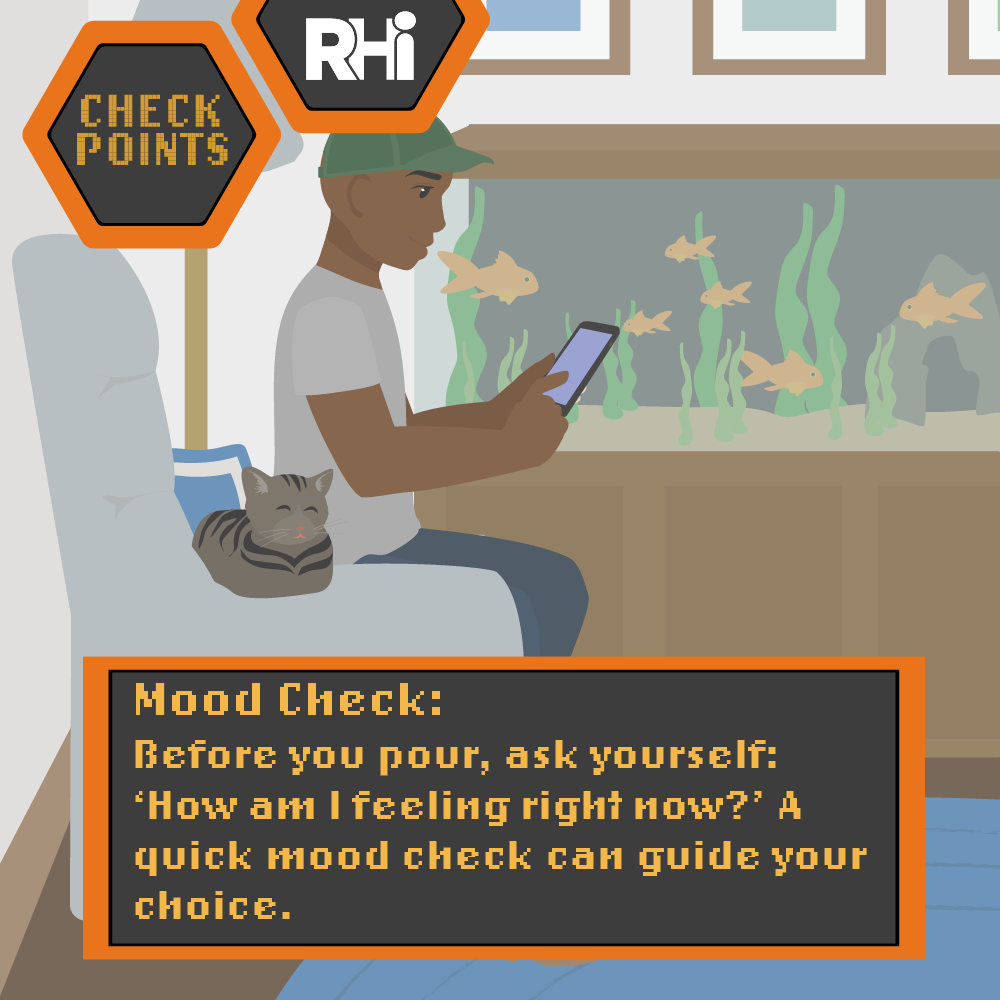
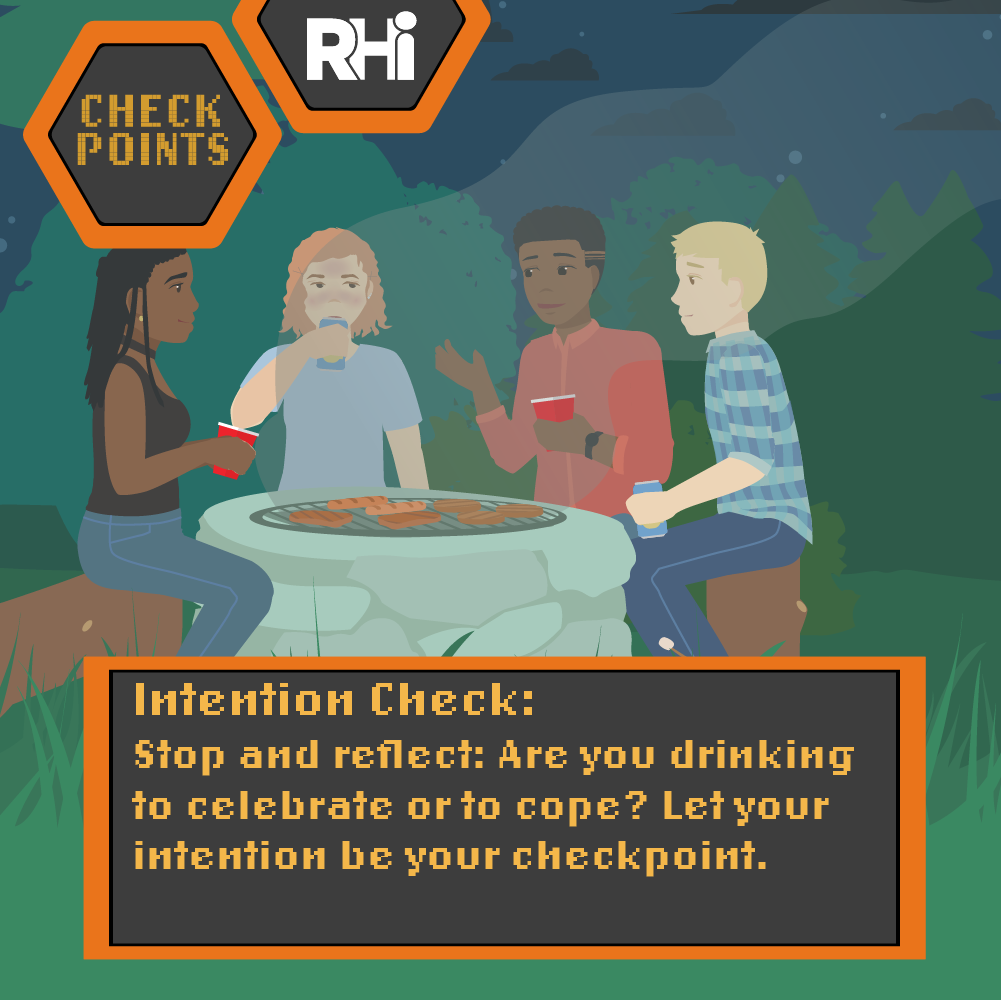
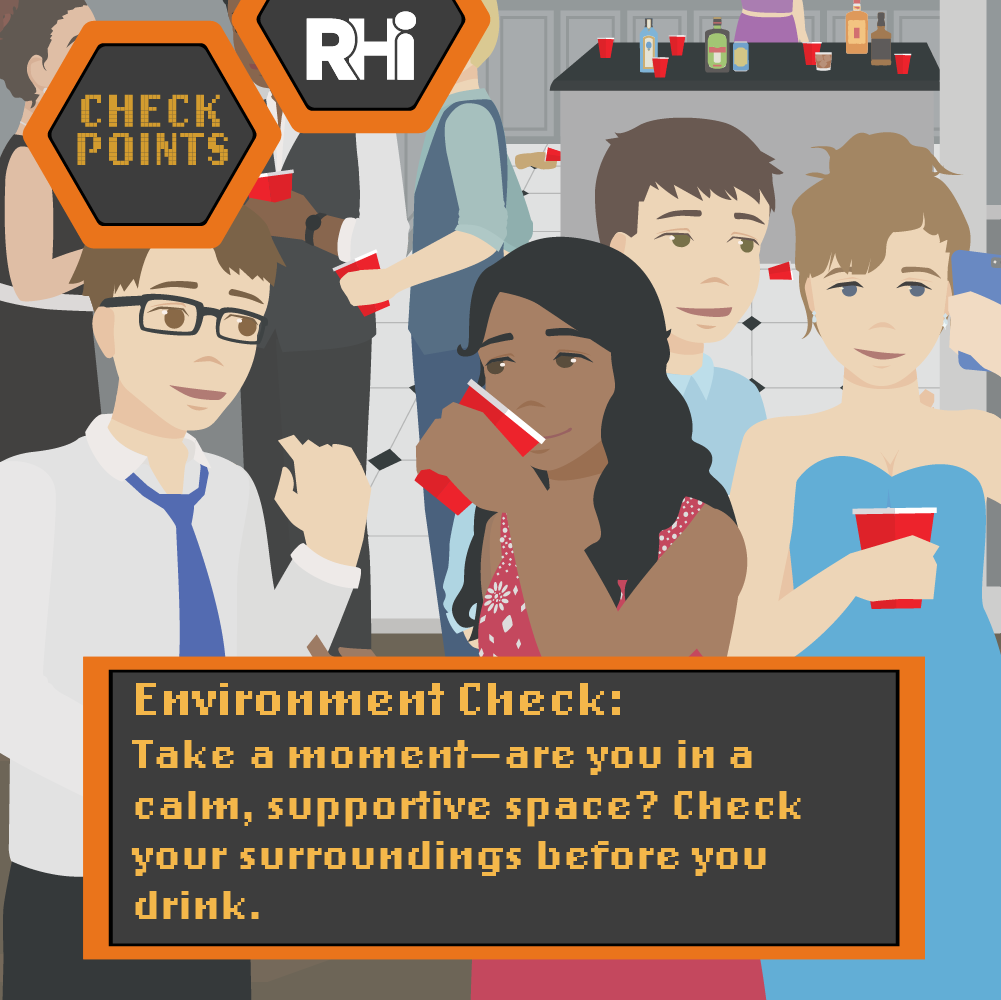
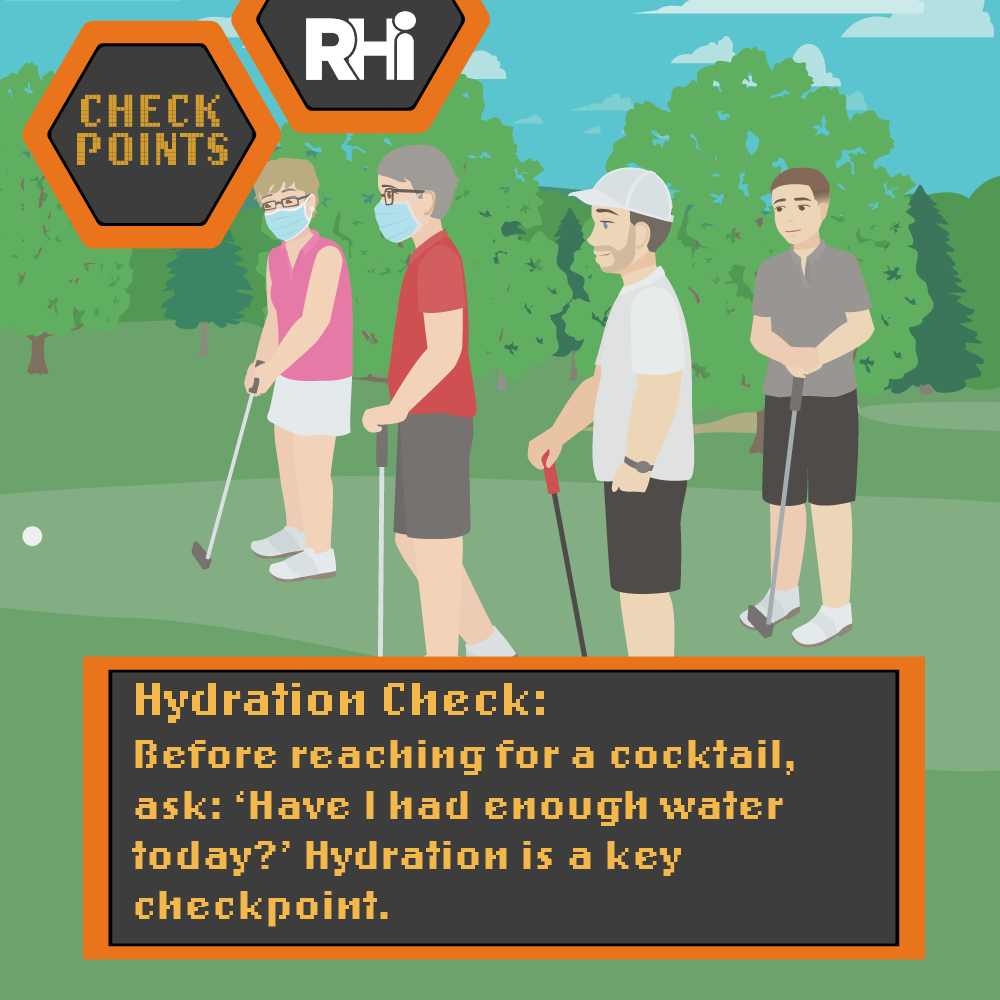
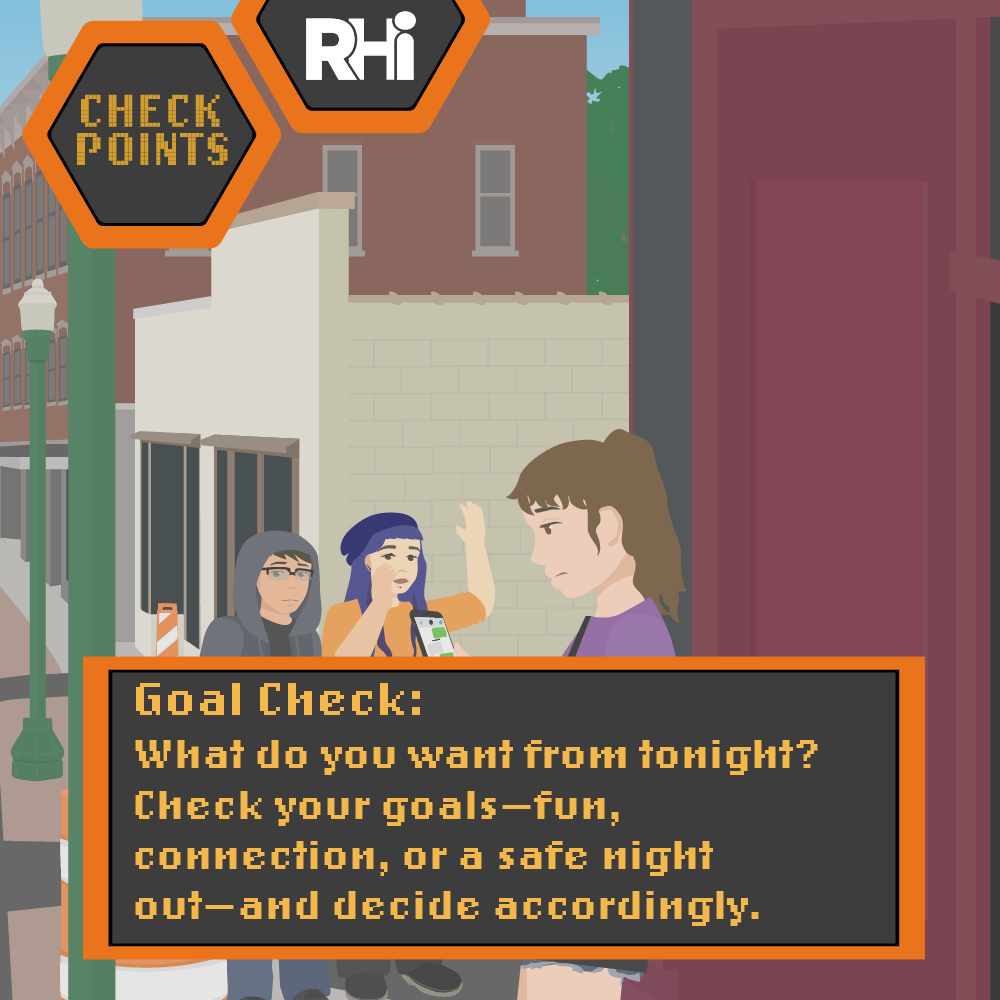
Above are a sample of campaign content. Community partners are welcome to utilize campaign materials on their own social media accounts. The materials can be accessed here:
https://nyrhi.softr.app/campaign-details?recordId=recM8NjBxLCCcSb4h
