
Why Sleep Matters in Cortland County: Launching the DreamWell Campaign
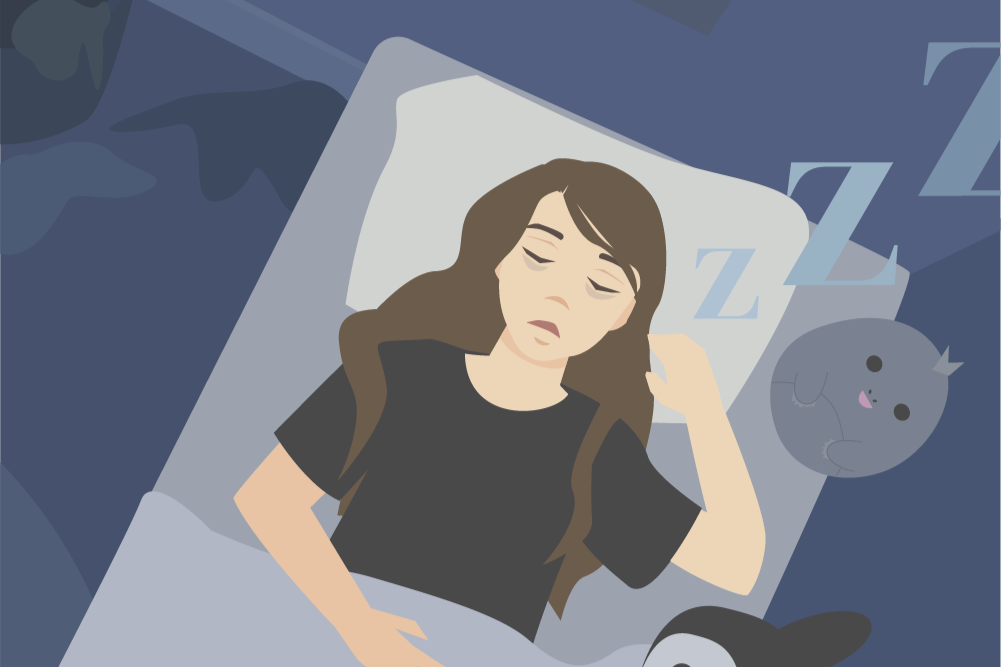
Each March, communities across the country observe National Sleep Awareness Month, a time dedicated to recognizing the vital role that sleep plays in overall health. While sleep is often treated as a personal habit, public health data tell a different story: sleep patterns are shaped by schedules, stress, environments, and social factors, and have ripple effects across nearly every aspect of well-being.
In Cortland County, local data make it clear that sleep deserves our attention. The 2025 Cortland County Youth Survey highlights strong connections between sleep, learning, mental health, and substance use among adolescents. These findings underscore an important message: sleep is not just about feeling rested. It is deeply tied to how young people show up in school, how they cope with stress, and how they navigate risk.
In recognition of National Sleep Awareness Month, the Rural Health Institute of New York is launching the DreamWell campaign: a data-informed effort to raise awareness about youth and adult sleep and share practical strategies that support healthier outcomes across our community.
What the Data Shows About Youth Sleep in Cortland County
Sleep is a foundational part of health, learning, and emotional well-being, but local data show that many teens in Cortland County are not getting the rest they need. According to the 2025 Cortland County Youth Survey, fewer than half (48%) of students ages 13 -18 reported getting the recommended 8 - 10 hours of sleep during the school week. One in five students reported sleepiness during the day as a significant problem for them.
Sleep patterns were closely tied to how students experienced school. Teens who got the recommended amount of sleep were more likely to report that their learning felt meaningful and important, that they tried their best on schoolwork, and that they missed fewer days of school. In contrast, students who did not get enough sleep were more likely to report skipping school and feeling persistently fatigued during the day - factors that can make it harder to engage, learn, and feel successful. In the 2025 Cortland County Youth Survey, 40% of students who did not get their recommended hours of sleep reported missing school days.
The data also highlight differences in who is most affected. Girls in Cortland County were less likely than boys to get the recommended hours of sleep, and students who reported family conflict were also less likely to be well rested. These patterns suggest that sleep is shaped not just by individual habits, but by social, emotional, and environmental factors.
Why Sleep Is a Protective Factor for Youth Well-Being
Across nearly every outcome measured in the Youth Survey, sleep stood out as a powerful protective factor. Teens who did not get enough sleep were more likely to report feelings of anxiety, stress, and worry, as well as symptoms of depression. In the 2025 Youth Survey, about one-quarter (24%) of students who did not get the recommended hours of sleep reported experiencing depressive symptoms.
Sleep was also closely linked to mental health care access and risk. Students who did not get enough sleep were about twice as likely to report suicidal ideation, self-harm, and suicide attempts. Youth who were not getting enough sleep were more likely to report wanting mental health care, and more likely to report needing care but not receiving it. While sleep alone cannot explain these experiences, the consistency of these patterns underscores how deeply rest is connected to emotional regulation and resilience.
In addition to mental health, sleep was strongly associated with substance use. Students who did not get enough sleep were twice as likely to report lifetime alcohol or cannabis use, nearly three times more likely to vape daily, and more than twice as likely to use cannabis daily. When young people are overtired, decision-making and impulse control can be affected, making it harder to cope with stress and easier to engage in risky behaviors.
Taken together, these findings show that sleep is not a “nice to have.” It is a core component of health, safety, and fulfillment.
Introducing DreamWell: Turning Local Data Into Supportive Action
The DreamWell campaign was created in response to what local data are telling us: sleep touches nearly every aspect of young people’s lives in Cortland County. Rather than focusing on a single outcome, DreamWell brings together patterns across learning, mental health, stress, and substance use to highlight sleep as a shared community concern.
DreamWell pairs data with practical, evidence-based strategies that support healthy sleep in realistic ways. Campaign messages focus on creating sleep-conducive environments, reducing barriers to rest, and promoting routines that help signal the body and brain that it is time to wind down.
While some families may already be familiar with sleep guidance through parenting-focused resources, DreamWell takes a broader public health approach. By grounding the campaign in local youth data, DreamWell aims to increase awareness, reduce stigma, and encourage conversations about sleep as an essential part of youth well-being.
As the campaign continues, RHI will share data-informed insights and practical messages to help our community better understand why sleep matters and how supporting healthy sleep can support healthier outcomes for young people across Cortland County.
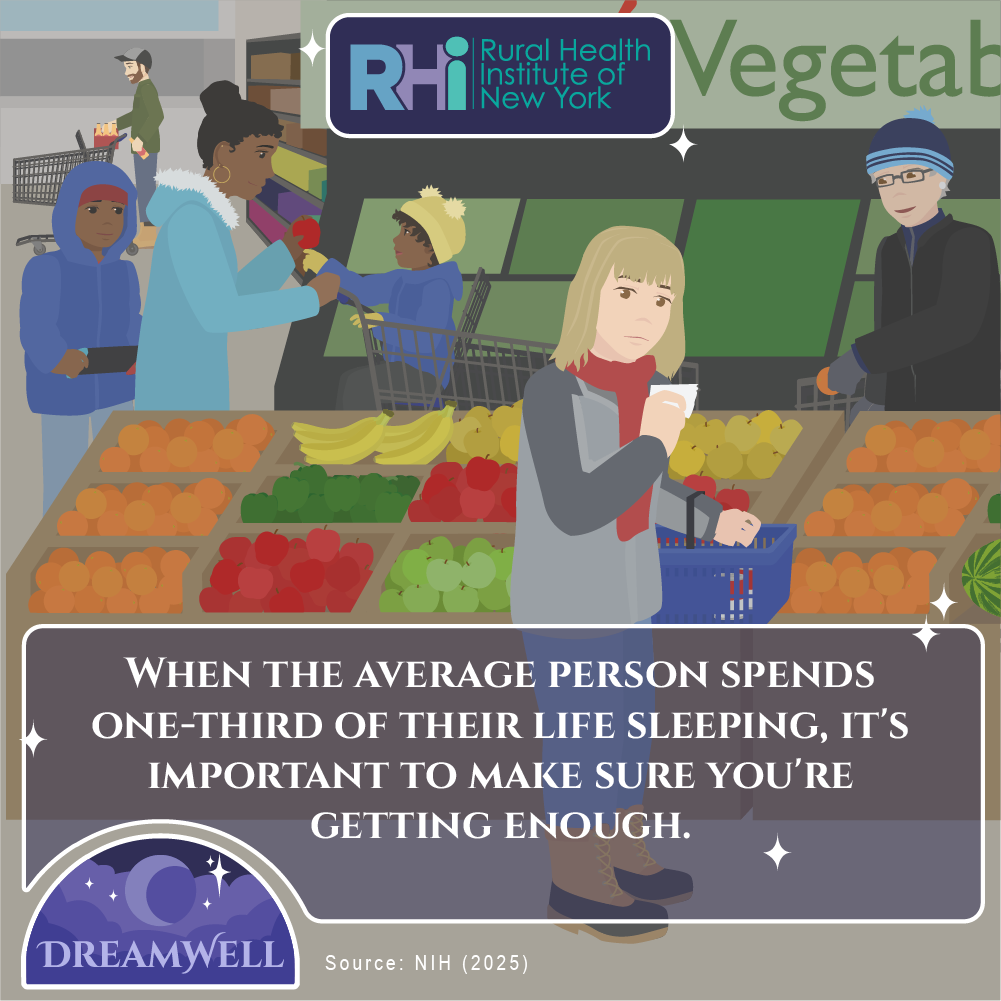
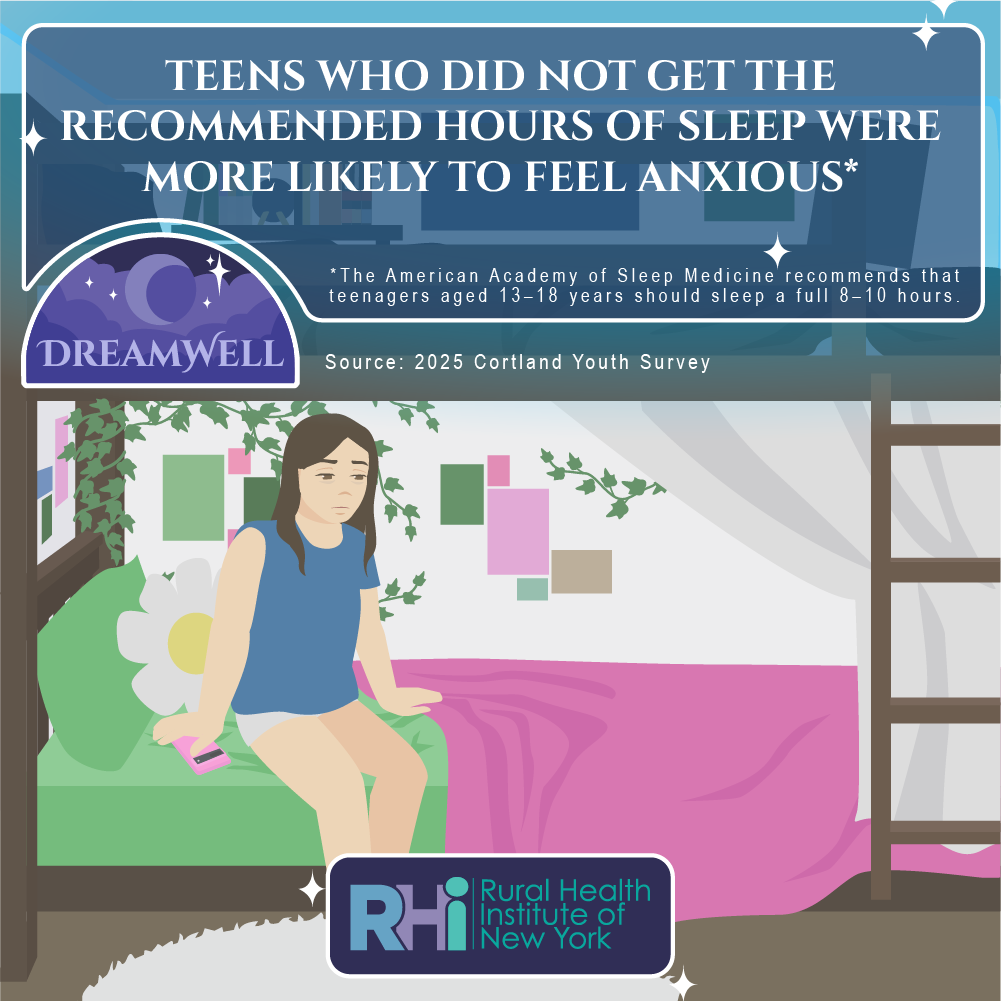
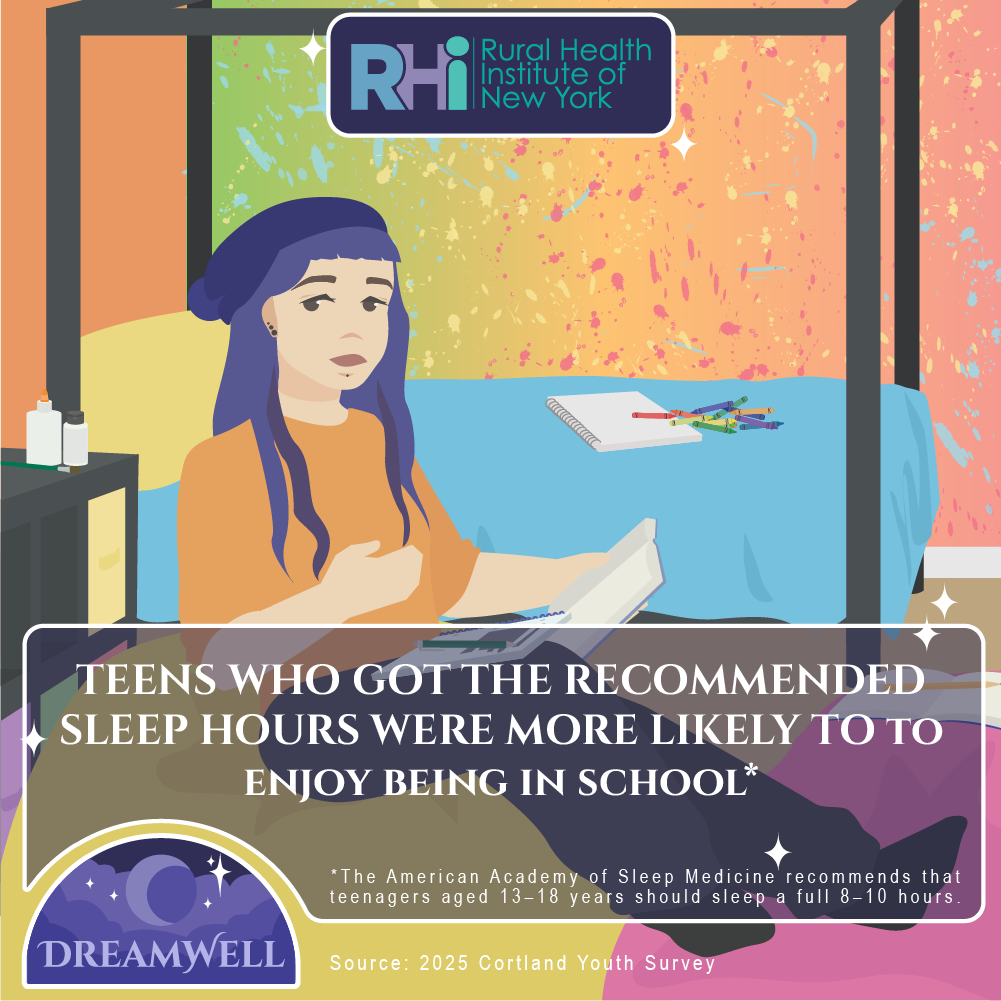
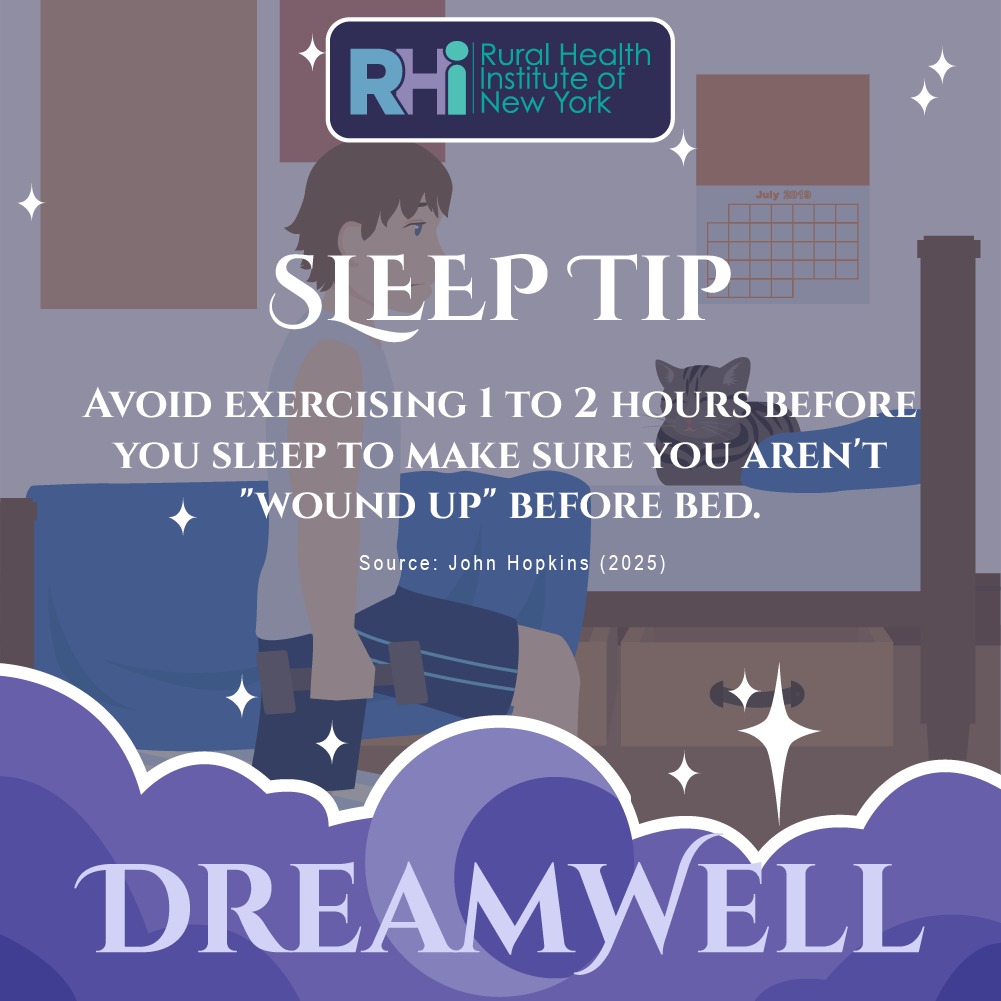
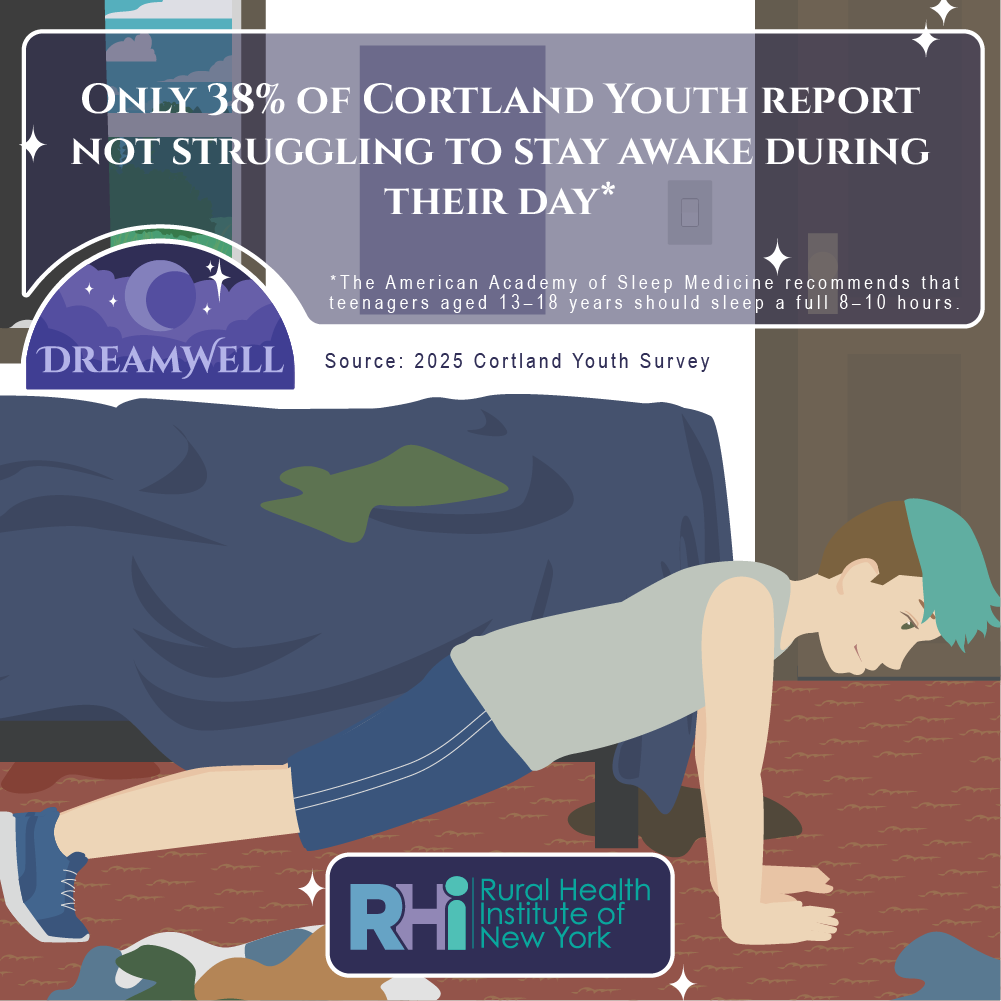
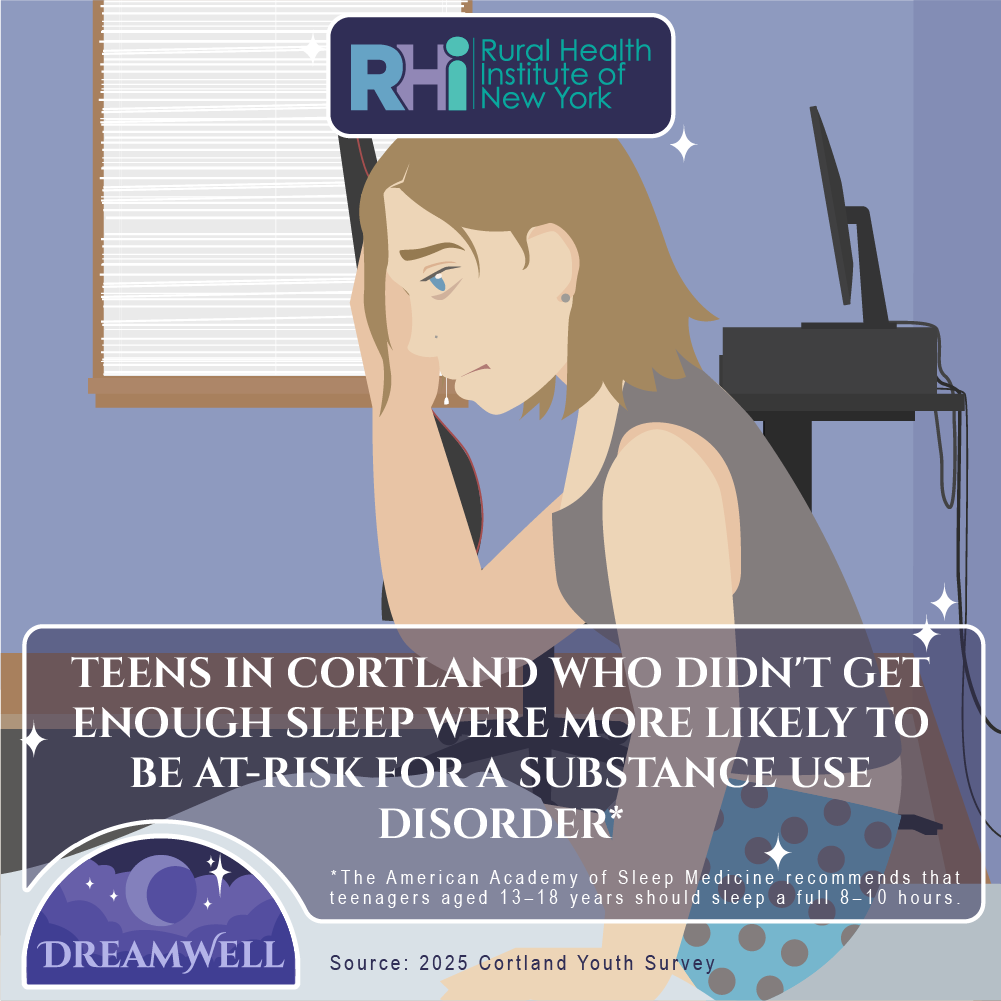
Above are a sample of campaign content. Community partners are welcome to utilize campaign materials on their own social media accounts. The materials can be accessed here: https://airtable.com/appcLGUkVZwz3PqPj/shrkBaYFXeKFtZRHQ/tblk9YLNHcvhJ86nc
